
HOPE Sheds Light Partnership
Building Sustainable Peer Grief Support for Families Impacted by Substance-Related Loss
Peer Support Community Partners (PSCP) is proud to partner with HOPE Sheds Light to strengthen peer grief support services for individuals, families, and communities affected by substance use and substance-related deaths.
This collaboration combines HOPE Sheds Light's longstanding commitment to recovery support with PSCP's expertise in peer grief support and workforce development. Together, we are working to build sustainable peer grief support capacity within the organization while creating stronger supports for grieving families throughout New Jersey.
The Need
Families grieving substance-related deaths often face unique challenges, including stigma, trauma, complicated family dynamics, unanswered questions, and social isolation. While many recovery support professionals and volunteers regularly encounter grief in their work, few receive specialized training on how to support people navigating these complex losses.
Recognizing this need, HOPE Sheds Light partnered with PSCP to develop a comprehensive peer grief support initiative tailored to the realities of substance-related loss.
Building Skills Through Training
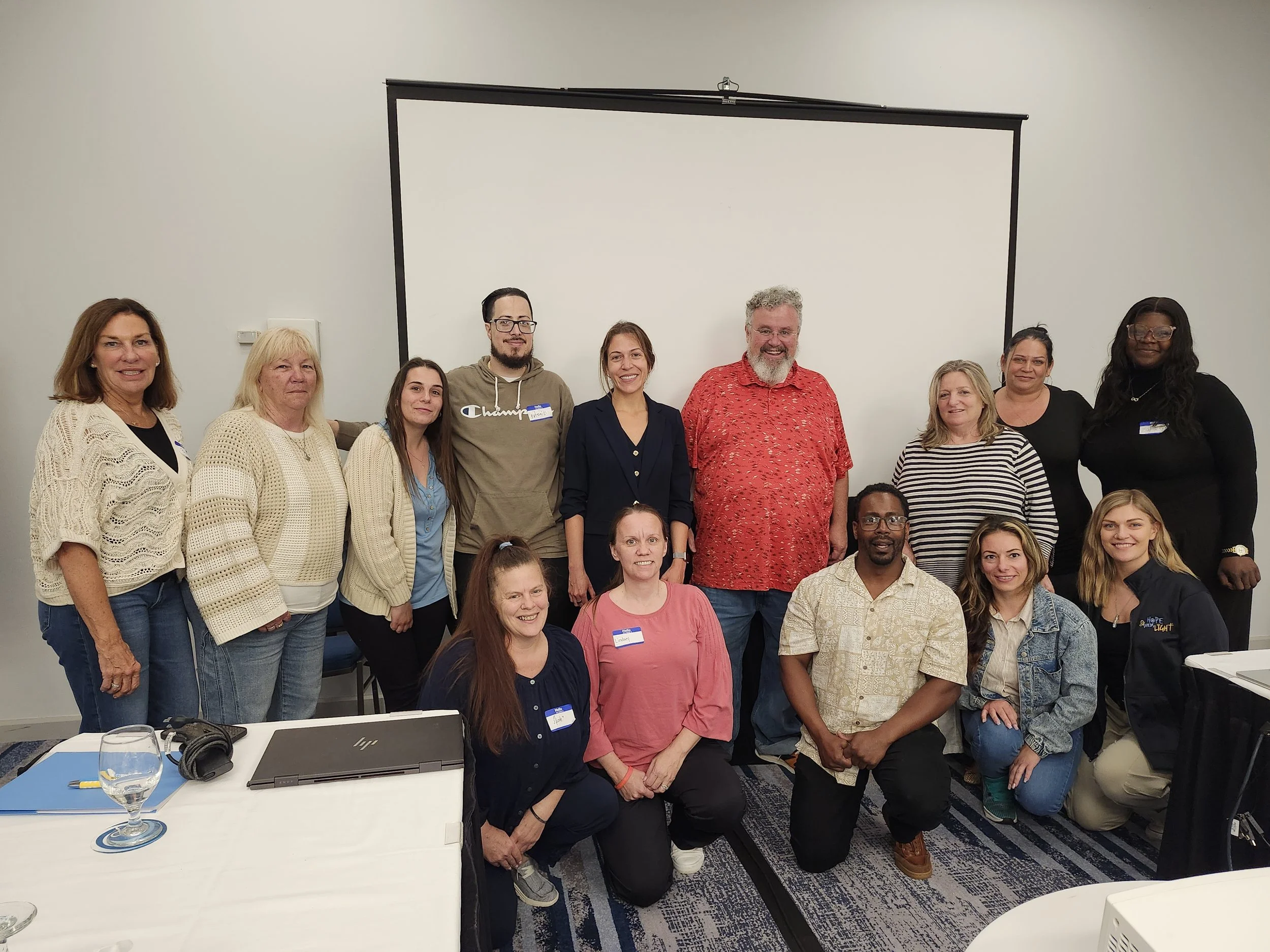
On May 26-27, 2025, PSCP facilitated a customized two-day Peer Grief Support Training for Hope Sheds Light staff and volunteers.
Based on PSCP's RIVER Model of Peer Grief Support, the interactive training explored:
Foundations of grief and bereavement
The unique grief following substance-related deaths
The impact of stigma on grieving individuals and families
Cultural humility in grief support
Building trust and rapport with newly bereaved people
Trauma-informed and grief-informed care
Peer grief support skills using the RIVER Model
Facilitation of peer grief support groups
Crisis response, de-escalation, and referral practices
Sustainability and self-care for peer supporters
Participants engaged in reflection, discussion, skill-building exercises, and practical application activities designed to prepare them to provide compassionate peer support while honoring their own grief experiences and boundaries.
The RIVER Model
The training was grounded in PSCP's RIVER Model, which helps peer supporters:
Relate
Invite
Validate
Empower
Reassure
The model provides a practical framework for connecting with grieving individuals in ways that foster trust, reduce isolation, and support healing without attempting to fix or solve grief.
Looking Ahead: Peer Grief Supporter Sharing Circles
This partnership extends beyond training.
Beginning in Summer 2026, HOPE Sheds Light will launch Peer Grief Supporter Sharing Circles to provide ongoing support and connection for staff and volunteers engaged in grief support work.
These circles are designed to:
Strengthen peer supporter resilience
Reduce isolation and burnout
Foster mutual support and learning
Create a sustainable community of practice
Promote long-term wellbeing among those providing grief support
PSCP will continue to support implementation through consultation, leadership development, and guidance as the program grows.
Why This Partnership Matters
This project reflects PSCP's belief that communities are strongest when they have the capacity to support their own grieving members.
Rather than providing one-time training alone, this partnership focuses on creating sustainable systems of peer grief support that can continue serving families long into the future. By integrating grief-informed care, recovery support, peer support principles, and organizational sustainability, HOPE Sheds Light is helping lead the way in addressing the often-overlooked needs of individuals and families grieving substance-related deaths.
Project Focus Areas
Peer grief support workforce development
Grief following substance-related deaths
Recovery community support
Trauma-informed and grief-informed care
Community capacity building
Peer supporter wellness and sustainability
Long-term program development